
For attorneys, legal nurse consultants, litigation teams, claims professionals, and healthcare risk professionals evaluating OB-GYN matters.
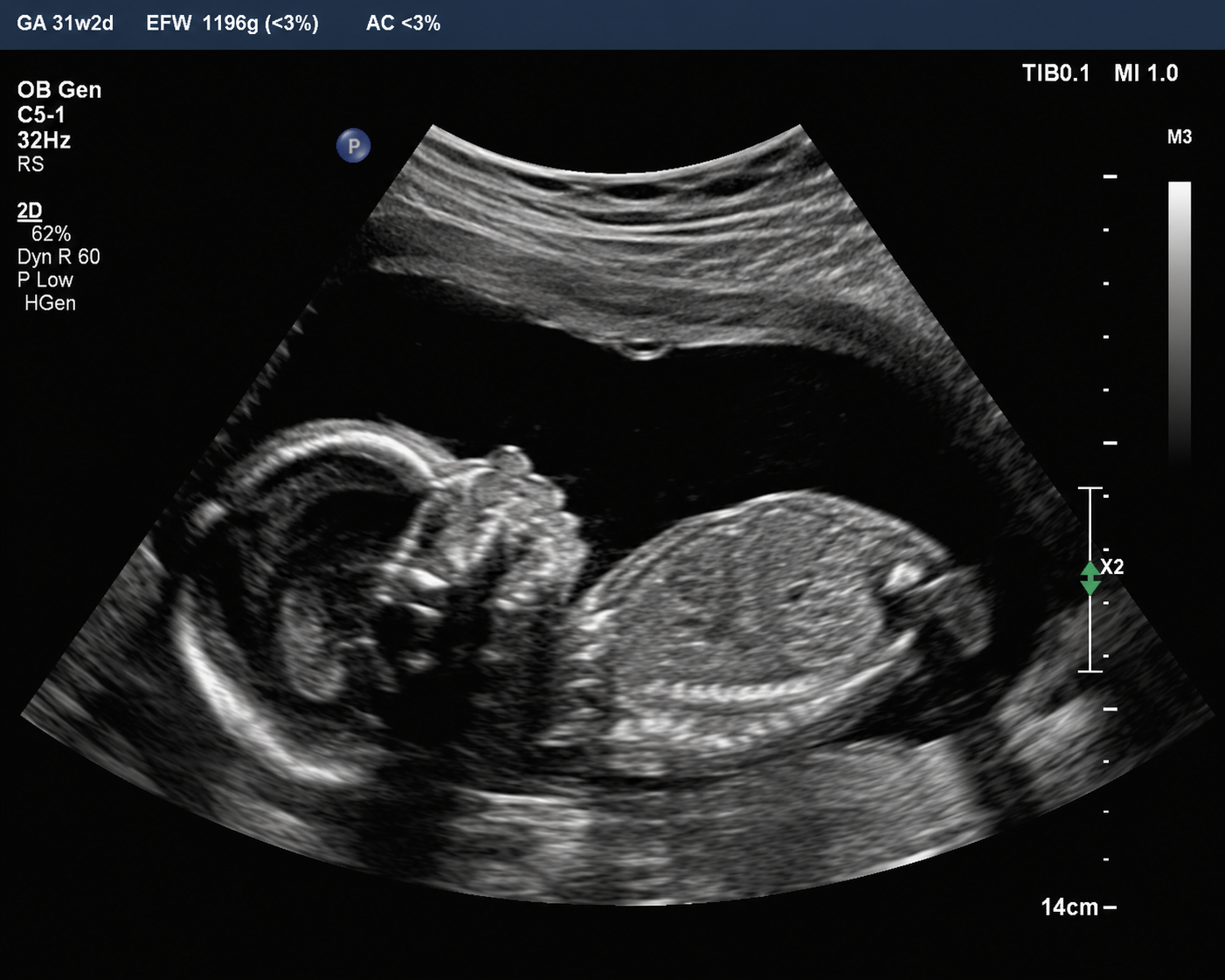
Ultrasound estimated fetal weight and abdominal circumference are valuable tools. Ultrasound estimates also have inherent measurement uncertainty. The first thing I check is whether the dating was ever confirmed, and then I compare serial studies using consistent reference points. Early-onset disease, severe growth restriction, abnormal fluid, maternal hypertension, and abnormal umbilical artery Doppler findings tell a very different story than an isolated, mildly small baby near term — those aren't the same situation, and they shouldn't be treated as if they are.
Once fetal growth restriction is diagnosed, I want to see an individualized surveillance plan reflected in the record — not a one-size-fits-all approach. Depending on how things present, that might mean serial growth assessments, umbilical artery Doppler studies, nonstress testing or cardiotocography, a biophysical profile, and a workup for maternal or fetal causes. And I want to flag something specific here: absent or reversed end-diastolic flow is not just "an abnormal Doppler" — it's a different category altogether, one that can change how intensively we're monitoring, whether hospitalization is warranted, whether corticosteroids are given, and when delivery should happen.
Depending on who's reviewing, that same record tells different stories. Plaintiff counsel may point to risk factors that were missed, growth that wasn't tracked closely enough, recognition that came too late, surveillance that wasn't adequate, Doppler results that worsened without a response, or delivery that was delayed beyond what was safe. Defense counsel may point to a baby who was simply constitutionally small, a condition that emerged late, natural measurement variability, surveillance that was genuinely reassuring at the time, competing risks of prematurity, or an outcome that traces back to an underlying placental or fetal disorder rather than to when delivery happened.
What I won't do is assume causation just because a baby was small and the outcome was poor. A credible expert has to look at the placental pathology, any maternal disease, infection or genetic workup where relevant, what the fetal compromise actually looked like, and — critically — whether earlier delivery would more likely than not have changed the outcome at all.
Questions for Counsel
- Was gestational age confirmed by first-trimester ultrasound, and if not, how was EDD established — and does the dating uncertainty affect the growth percentile interpretation?
- What surveillance followed the diagnosis or suspicion of fetal growth restriction, and how did serial growth findings influence subsequent management?
- What role did umbilical artery Doppler assessment play in surveillance, what were the documented findings, and how were those findings incorporated into management?
- At what gestational age was delivery recommended, and was the decision to continue expectant management consistent with ACOG delivery timing guidelines for the documented severity of FGR?
- In a stillbirth case, what was the last documented reassuring surveillance test, and what was the interval between that test and the confirmed demise?

Disclaimer: This material is for general educational purposes and does not constitute legal advice, medical advice, or a case-specific standard-of-care or causation opinion. Clinical guidance changes over time. Every matter requires review of the complete record, applicable guidance in effect on the date of care, local resources, and jurisdiction-specific legal standards. For consultation on a specific case, contact OBGYN Peer.