
For attorneys, legal nurse consultants, litigation teams, claims professionals, and healthcare risk professionals evaluating OB-GYN matters.
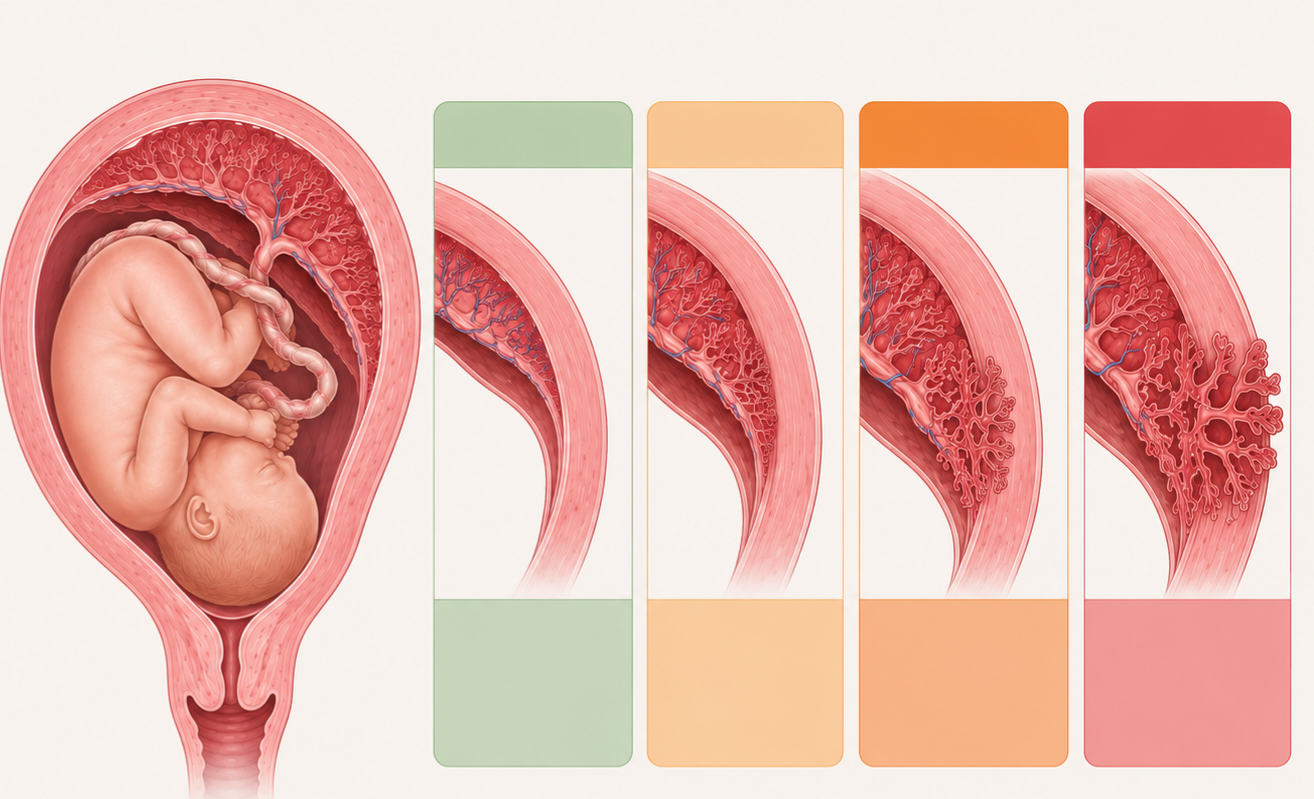
Placenta accreta spectrum covers a range — from a placenta that's simply abnormally adherent to one that's invaded much more deeply. A prior cesarean combined with placenta previa is one of the biggest risk contexts we watch for, though imaging findings and clinical history should be considered together rather than either one on its own. Ultrasound plays a central role in evaluating this, but I want to be clear: a negative or equivocal study doesn't erase real clinical risk. It just means we didn't see it — not that it isn't there.
When I review these records, I'm looking at when placental location and any prior uterine surgery became known, whether targeted imaging was ordered, whether maternal-fetal medicine or an experienced center got involved, and how delivery was actually planned around all of it. Good preparation often means a multidisciplinary surgical team, the right anesthesia plan, neonatal support standing by, blood products ready, massive transfusion capability, critical care access, and an operative plan that honestly anticipates the possibility of a cesarean hysterectomy — not one that hopes it won't come to that.
An unexpected finding in the operating room raises a very different question than a case where all the antenatal signs pointed this direction well in advance. So I look at what was reasonably knowable beforehand, and then — once abnormal adherence or catastrophic bleeding was actually encountered — whether the team recognized what was happening, avoided disturbing the placenta unnecessarily when they could, pulled in the resources they needed, and adapted as things unfolded.
For plaintiff counsel, the case often centers on antenatal clues that were missed, a referral that should have happened and didn't, blood preparation that fell short, or a delivery setting that wasn't equipped for what happened. For defense counsel, the issues often involve the real limitations of imaging, atypical placentation that's genuinely hard to catch, an emergency presentation with no warning, hemorrhage that moved faster than even good preparation could handle, or injury that was simply unavoidable in the course of life-saving surgery. The appropriate comparison is not to a perfect outcome, but to reasonable care given the risk profile and resources available at the time.
Questions for Counsel
- What does the record show regarding PAS risk recognition, targeted imaging, who interpreted the images, and the guidance and resources applicable at the time of care?
- What counseling, referral planning, multidisciplinary preparation, and facility resources were documented once placenta accreta spectrum was suspected or diagnosed?
- What does the operative record document regarding placental separation, any attempt at placental removal, intraoperative recognition of possible PAS, and the team's response to those findings?
- Was a massive transfusion protocol activated promptly, and were interventional radiology or other hemorrhage control resources available and utilized?
- If the patient underwent hysterectomy, was it planned as part of the delivery strategy or performed as an emergency due to hemorrhage from an unanticipated PAS diagnosis?

Disclaimer: This material is for general educational purposes and does not constitute legal advice, medical advice, or a case-specific standard-of-care or causation opinion. Clinical guidance changes over time. Every matter requires review of the complete record, applicable guidance in effect on the date of care, local resources, and jurisdiction-specific legal standards. For consultation on a specific case, contact OBGYN Peer.