
For attorneys, legal nurse consultants, litigation teams, claims professionals, and healthcare risk professionals evaluating OB-GYN matters.
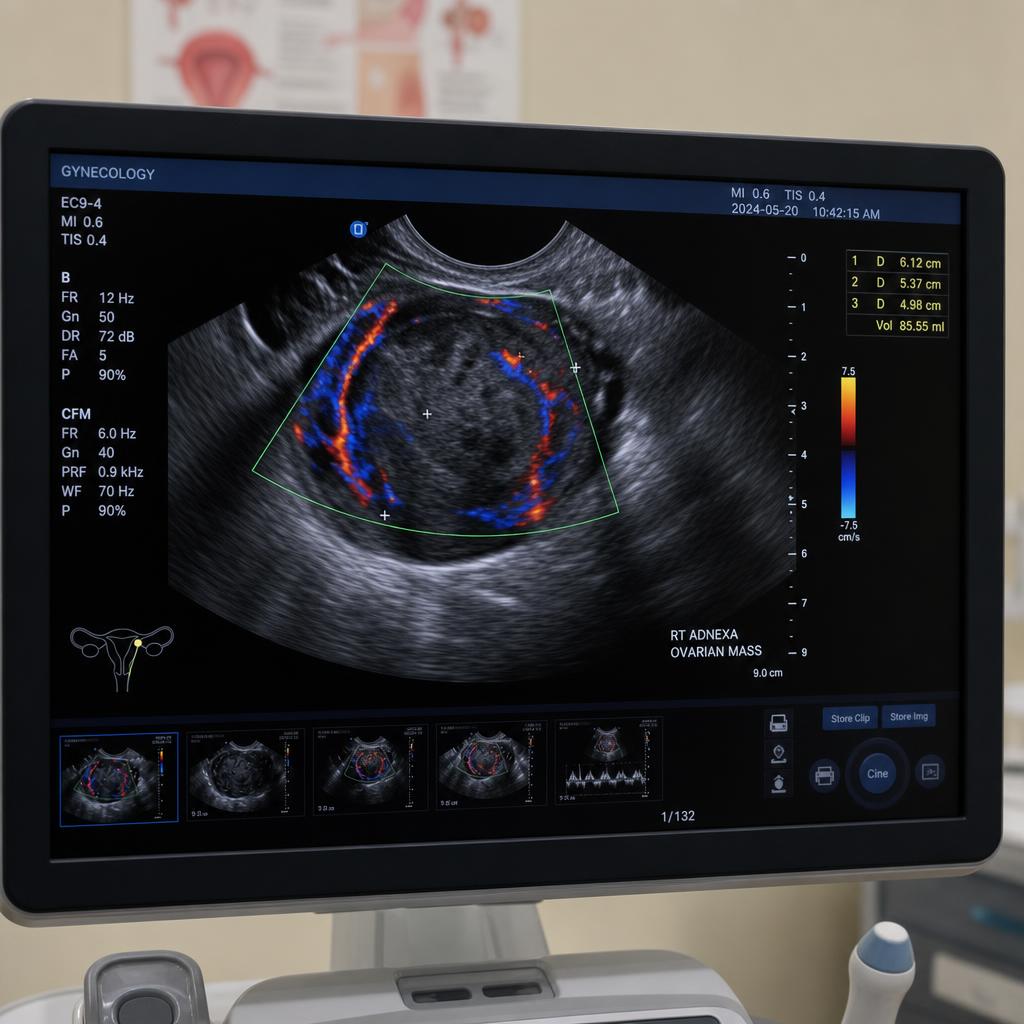
Ovarian torsion is one of those diagnoses that can look textbook one day and completely atypical the next. Classically it's acute pelvic or abdominal pain with nausea and vomiting, but the pain can be intermittent, and the presentation doesn't always follow the script. An adnexal mass raises the risk. On imaging, reduced or absent Doppler flow is a helpful sign. Preserved Doppler flow does not exclude torsion, because the ovary has a dual blood supply and the twisting itself can be intermittent.
When I go through the record, I'm tracking the onset and evolution of the pain, the exam findings, pregnancy status, the specifics of the imaging, what else was on the differential, any consultations, how the patient responded to analgesics, discharge instructions, whether she came back, how quickly the OR was accessible, and what was actually found in surgery. What I try hard not to do is assume the final diagnosis was obvious at an earlier point just because we know it now — the fairer question is what was reasonably suspected at each step along the way.
Once torsion is suspected strongly enough, getting to surgical evaluation quickly really matters, since the diagnosis is ultimately confirmed in the OR. Current practice leans toward detorsion and trying to preserve the ovary when that's feasible, even if it looks compromised at first glance — though age, concern for malignancy, how intact the tissue is, bleeding, and what's actually found during surgery can all shift that plan.
Plaintiff theories in these cases often center on leaning too heavily on Doppler results, not acting on recurring classic symptoms, a consultation that took too long, or surgery that was delayed even after the decision to operate was made. Defense analysis tends to point to a presentation that wasn't clearly torsion at the time, other diagnoses that were reasonable to consider first, prompt reassessment as things changed, or ovarian damage that had already occurred before any alleged delay even began. And causation here has to be specific — did the interval in question probably change ovarian viability, fertility, hormonal function, or whether an oophorectomy ultimately became necessary?
Questions for Counsel
- At what time did the patient first report pelvic pain to a medical provider, and what diagnoses were considered and what workup was ordered at that visit?
- What does the imaging report document regarding ovarian blood flow, and how were those findings considered with the clinical presentation and other diagnostic information?
- How was ovarian torsion considered within the differential diagnosis at each presentation, and what clinical and imaging findings informed the assessment?
- What was the interval between the first documented clinical presentation consistent with torsion and the eventual surgical intervention — and was the ovary viable at the time of surgery?
- If the ovary was removed rather than detorsed, is there documentation of the intraoperative appearance and the clinical reasoning for oophorectomy — and does that reasoning meet the current evidence-based standard for ovarian conservation?

Disclaimer: This material is for general educational purposes and does not constitute legal advice, medical advice, or a case-specific standard-of-care or causation opinion. Clinical guidance changes over time. Every matter requires review of the complete record, applicable guidance in effect on the date of care, local resources, and jurisdiction-specific legal standards. For consultation on a specific case, contact OBGYN Peer.